
Each year, the Xerces Society grants the Deborah BanDrosky Award to students who are engaged in research related to invertebrate conservation. 2026 was the initial year for this award.
2026 Deborah BanDrosky Award Recipients
Michael Adu-Brew – University of Maryland, Department of Entomology
Assessing pesticide risk to listed and at-risk Lycaenid species using eastern tailed-blue as a surrogate
Butterfly populations in the United States are declining, yet pesticide toxicity data remain limited for many federally listed species, particularly within the Lycaenidae. Because direct testing on listed butterflies is not feasible, conservation and regulatory agencies rely on surrogate species to inform pesticide risk assessments. This work evaluates the eastern tailed-blue (Cupido comyntas) as a biologically relevant surrogate for listed lycaenid species. Acute toxicity bioassays will quantify sensitivity to newer insecticide classes and pesticide mixtures, and results will be compared with published toxicity data for non-lycaenid butterflies. Outcomes will fill data gaps and improve pesticide risk assessments to aid conservation.

Rachel Laura – University of Arizona, Natural Resources
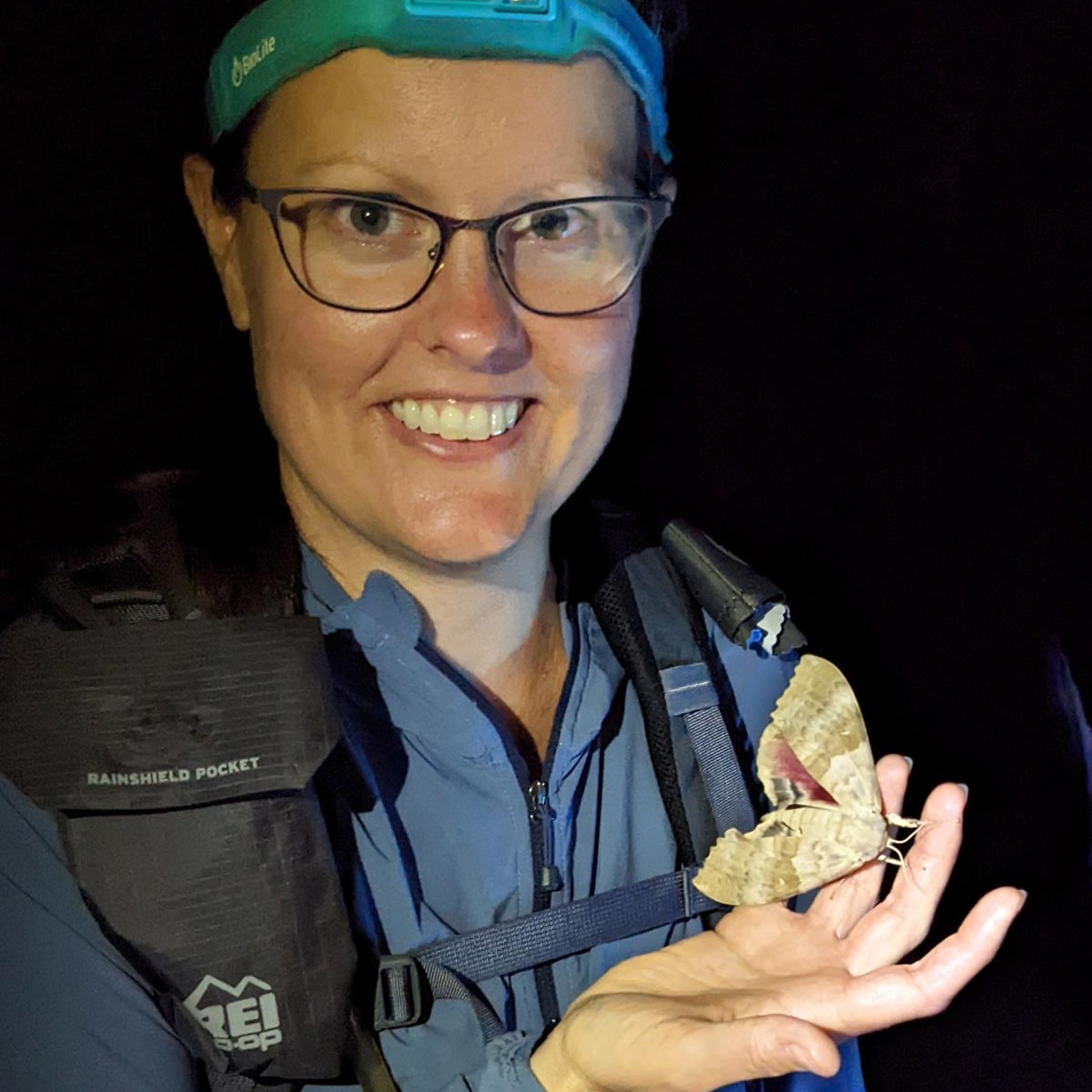
Assessing the distribution and habitat use of the southwest spring firefly (Bicellonycha wickershamorum) across central Arizona
Fireflies are increasingly threatened worldwide, yet fundamental ecological information is lacking for many species, including the southwest spring firefly (Bicellonycha wickershamorum), a riparian-dependent species known primarily from Arizona. This lack of ecological data constrains efforts to assess the species’ conservation status, including informing an upcoming Endangered Species Act (ESA) listing decision, and limits the development of species-specific management recommendations. My research will investigate the distribution of the southwest spring firefly within the Verde Watershed of central Arizona and identify key environmental features associated with that distribution. In addition, this work will evaluate the use of occupancy models for fireflies, a promising but largely untested approach in firefly research. Building on pilot work from 2025 that confirmed previously undocumented and historical populations, I will conduct repeated firefly surveys at 25–35 locations across the watershed during June and July, following The Xerces Society’s Firefly Atlas protocol with additional data collection and survey constraints to support rigorous analysis. These data will be analyzed using a hierarchical occupancy framework to identify environmental drivers of occupancy, evaluate factors influencing detection, and document new populations. Together, these outcomes will improve understanding of the species’ ecology, support targeted conservation and management actions, and inform conservation decision-making. More broadly, this study will demonstrate the utility of occupancy models for firefly research, providing a transferable tool for studying firefly ecology worldwide. Results will be shared widely with both scientific and public audiences at local, regional, and global scales.
2026 Deborah BanDrosky Award Honorable Mentions
Alexa Hershberger – University of Massachusetts- Amherst, Organismic and Evolutionary Biology Program
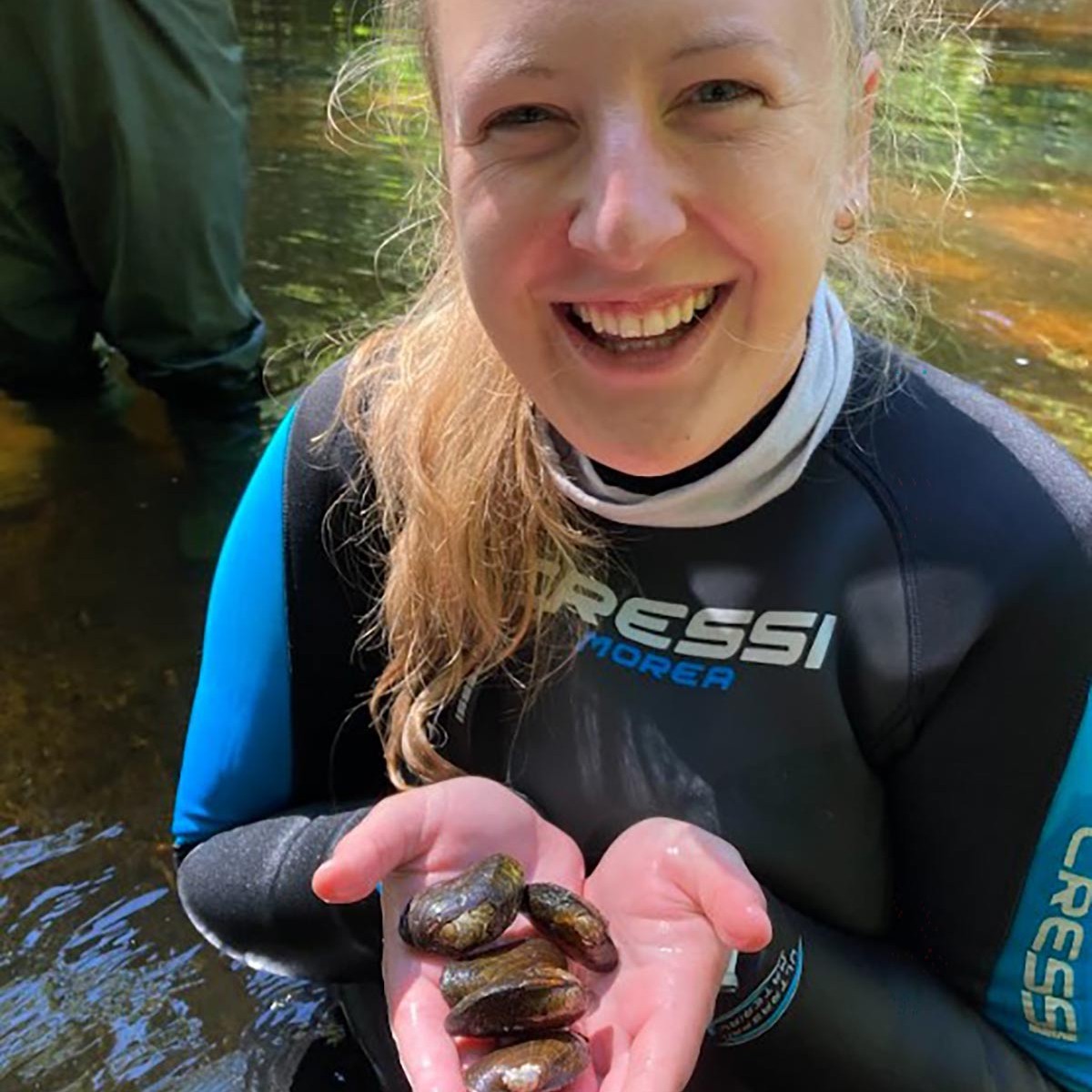
Investigating the short-term impacts of a phased dam removal on freshwater mussels in Massachusetts, USA
Dam removals may harm surrounding biotic communities from sediment mobilization, high
flows, and rapid water level declines, especially impacting species that are relatively sessile like
freshwater mussels. To mitigate negative impacts, mussels can be translocated and/or the dam
removal process can be slowed to multi-year phases; however, both are poorly reported in
literature. In this study, we assessed 1) mussel mortality in the impoundment, 2) downstream
changes in mussel density and habitat, and 3) mussel response to translocation during a dam
removal. This work will inform future proactive mussel management practices for dam removals.
Grace Lovett – The University of Arkansas, Entomology and Plant Pathology
The biogeography of fireflies in Arkansas, Chapter One: The Arkansas River Valley
Fireflies are beetles belonging to the Lampyridae family and are a cherished star ship species, but not much is known about their habitat, distribution, or life history. This proposal focuses on surveying fireflies across the Arkansas River Valley ecoregion to build a foundational baseline of firefly ecology in Arkansas. By surveying, capturing, and cataloging firefly species on public lands, we can better paint a picture of the biogeography of fireflies in Arkansas through population and habitat trends. The results of this research can then be used to further study fireflies in Arkansas and eventually create a statewide list of species.