
In 2023, five thoughtful individuals from Washington, Iowa, came together to create P.L.A.N.T. Washington, which stands for People Learning and Nurturing Together, after seeing a community need for nutritious food, inclusion, and education. Many children and families are food insecure within the area. They envisioned a place to build community through food, conversations, and learning.
P.L.A.N.T secured a half-acre lease with the City of Washington, installed water, planted a small orchard of apples, cherries, peaches, and pears, and, with the help of local high school students, added 24 raised beds in 2024. Individuals can now annually lease a raised bed for a small fee to grow produce, and unclaimed beds are still used for food production and are available for public harvesting.
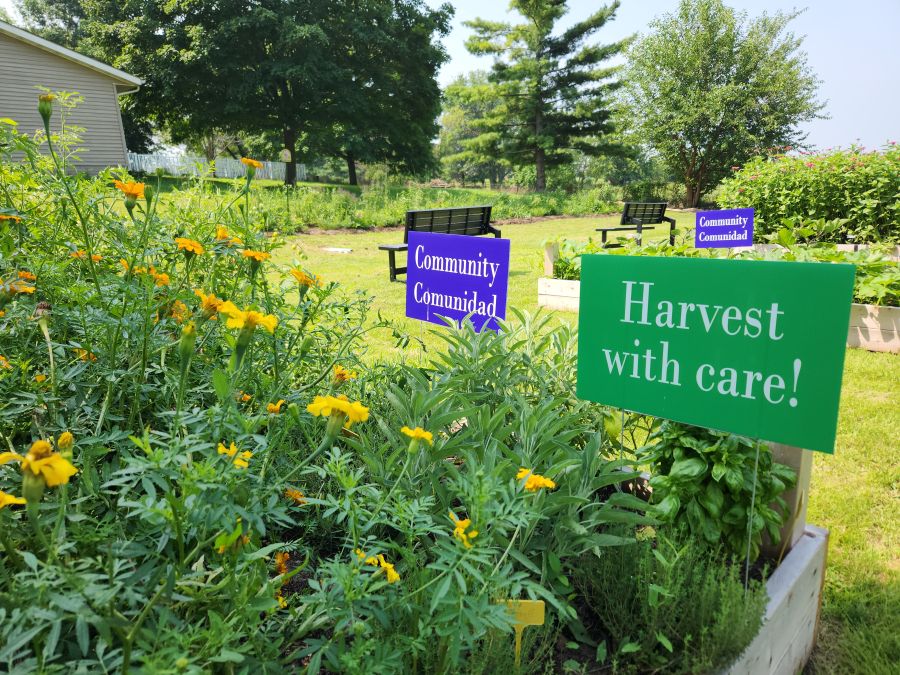
I first crossed paths with P.L.A.N.T. in 2025, when the group was interested in installing pollinator and beneficial insect habitat within the community garden to boost pollination and natural pest control. Decision making on farms can be a balancing act, often with limited time, labor, and resources. Installing native plants to support beneficial insects can provide stability for a small-scale farm or community garden. Through an Iowa Natural Resource Conservation Service (NRCS) conservation innovation grant (CIG) and in partnership with Practical Farmers of Iowa, Xerces was able to make this dream a reality.
Working together, we installed a native perennial insectary strip filled with plants like golden alexanders (Zizia aurea), prairie blazing star (Liatris pycnostachya), mountain mint (Pycnanthemum virginianum) and little bluestem (Schizachyrium scoparium) for pollinators and predatory insects that help control crop pests. A few months after planting, we were able to host a field day to showcase the project. During the field day, one attendee asked for resources to help recognize the insects providing pollination, natural pest control, or contributions to soil health and decomposition. To help address this need, we created a publication that outlines the beneficial insects at work in farms and gardens, organized by where the insects are most likely to be found.
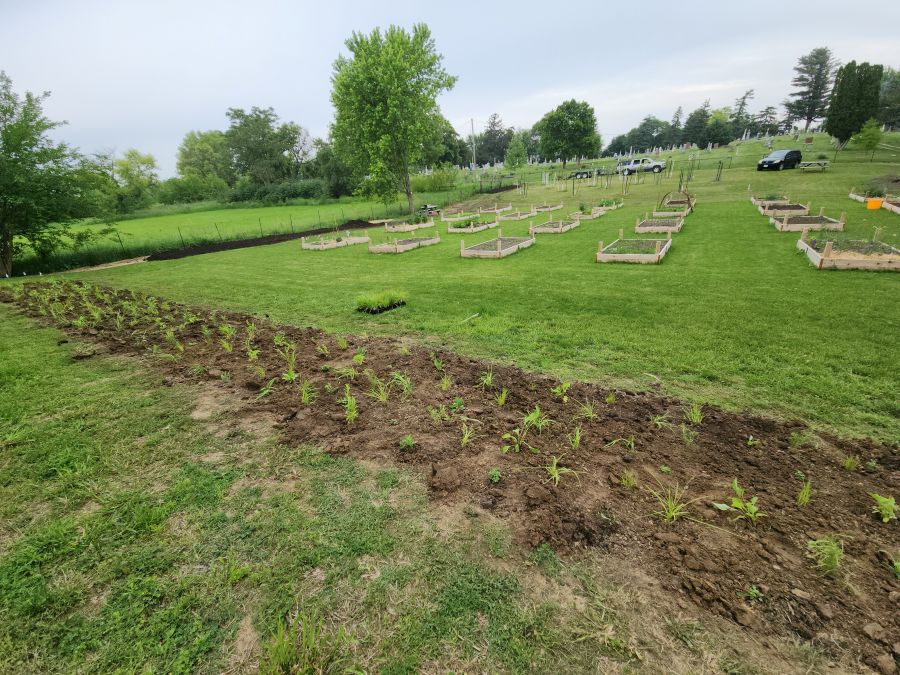
The work P.L.A.N.T. has accomplished in a few short years is remarkable, and there is no pause in sight. In the future, P.L.A.N.T. hopes to support the local schools by providing local, fresh produce. P.L.A.N.T. hopes to also offer the opportunity for the district’s students to visit the site and learn about native plants and insects, produce, soil health, and more. There are plans for additional raised beds and edible native plants in the form of shrubs and wildflowers will be planted in 2026. Although P.L.A.N.T. is responsible for turning ideas into action, many community members, partners, funders, and the city have assisted in making this dream come true and continue to help.
It has been an absolute pleasure to work with the folks involved in P.L.A.N.T. Their drive and commitment to their community is unmatched. I believe they are a great example of how a group of people, all bringing their own skills and strengths together, can accomplish big things for the greater good.
The quote, “Never doubt that a small group of thoughtful, committed citizens can change the world, indeed it is the only thing that ever has,” by Margaret Mead is iconic and the epitome of the work P.L.A.N.T. Washington has been conducting.
Further Reading:
Sarah Nizzi is originally from central Iowa and is a graduate from Drake University with a bachelor's of science in environmental science. Her specialties include habitat installation and management, native plant identification, diverse native seed mixes, and public speaking. Sarah has been with the Xerces Society for over five years.