


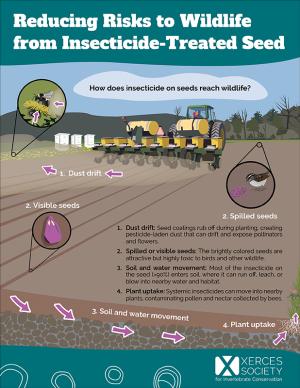
Insecticide-treated seeds can expose pollinators, birds, freshwater invertebrates, and other wildlife through dust drift during planting, movement into soil and water, uptake into nearby plants, and consumption of spilled or visible seeds. When planting insecticide-treated seeds, take steps to reduce off-site movement and lower risks to wildlife. Integrated pest management (IPM) approaches such as scouting, monitoring, crop rotation, and threshold-based decision making can also help to inform use of insecticide-treated seeds, which are often planted even when pest risk is low.
This Vermont-focused fact sheet provides practical guidance for growers on reducing off-site movement and wildlife exposure from insecticide-treated seed during planting and disposal, along with IPM approaches for early season insect pests.