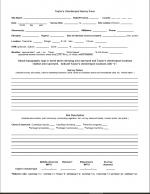
As a science-based organization, the Xerces Society produces dozens of publications annually, all of which employ the best available research to guide effective conservation efforts. Our publications range from guidelines for land managers, to brochures offering overviews of key concepts related to invertebrate conservation, from books about supporting pollinators in farmland, to region-specific plant lists. We hope that whatever you are seeking—whether it's guidance on making a home or community garden pollinator-friendly, advice on developing a local pesticide reduction strategy, or detailed information on restoring habitat—you will find it here!
Find Publications
Use the search functions to sort by publication type (books, guidelines, fact sheets, etc.), location, and/or subject (agriculture, gardens, pollinators, pesticides, etc.).
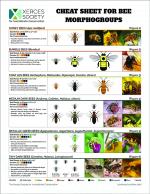
Bees are difficult to identify to species or family without having pinned specimens. But bee richness at a site can be measured by identifying bees to groups based on their morphology (also known as morphogroups), which use characteristics that can be seen in the field to categorize bees.
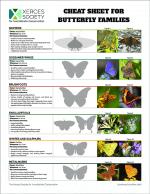
Most butterflies are difficult to identify to species in flight or at a distance while walking a transect during a site monitoring. But butterfly richness at a site can be measured by identifying and monitoring butterflies to their families based on their morphology, using common characteristics that can be quickly recognized in the field.
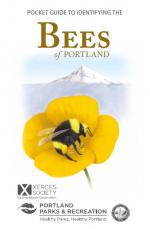
This pocket guide lists common species in the Portland metro area, created in partnership between the Xerces Society and Portland Parks and Recreation.
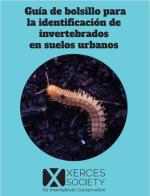
Aproximadamente el 25% de todos los organismos conocidos del planeta son animales que viven en el suelo durante toda o parte de su vida. La mayoría de estos animales son invertebrados que interactúan con microbios, plantas y entre sí, dando forma a la vida de suelos saludables.
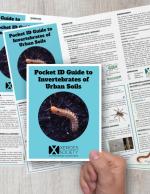
About 25% of all known organisms on the planet are animals that live in the soil through all or a portion of their lives. The majority of these animals are invertebrates that interact with microbes, plants, and each other, forming the life of healthy soils.

Por favor complete los datos sobre las especies de libélulas migratorias para Pond Watch.

Version 1, June 2024
This document is intended to serve as a resource for biologists and other professionals tasked with conducting surveys or research studies and to ensure that future survey efforts will improve the ability to compare data across the many watersheds and multiple U.S. states and Canadian provinces in which these species of freshwater mussels occur.