Bumble bees are important pollinators in both natural and agricultural ecosystems, and well known for their round and fuzzy appearance. But there are a lot of questions — and sometimes misinformation — about bumble bees out there! So we are bringing you answers, straight from our many bee experts.
Do bumble bees sting?
You are not likely to be stung by a bumble bee, even if some of them are technically able to do so.
Only female bumble bees (queens and workers) have a stinger, making them capable of stinging. Whether or not bumble bees actually use their sting is a different question.
A sting is one option bees have to defend themselves or their nests from predators. However, bumble bees rarely choose to sting humans; they prefer to fly away from us if they feel threatened.
In rare cases where bumble bees do sting, it is usually because they feel threatened by something that we are doing. We're walking too closely (or on) their nests, stepping on them while they are visiting flowers, or swatting at them because we feel nervous. While all of these are understandable, the best thing to do is to try to remain calm around all insects.
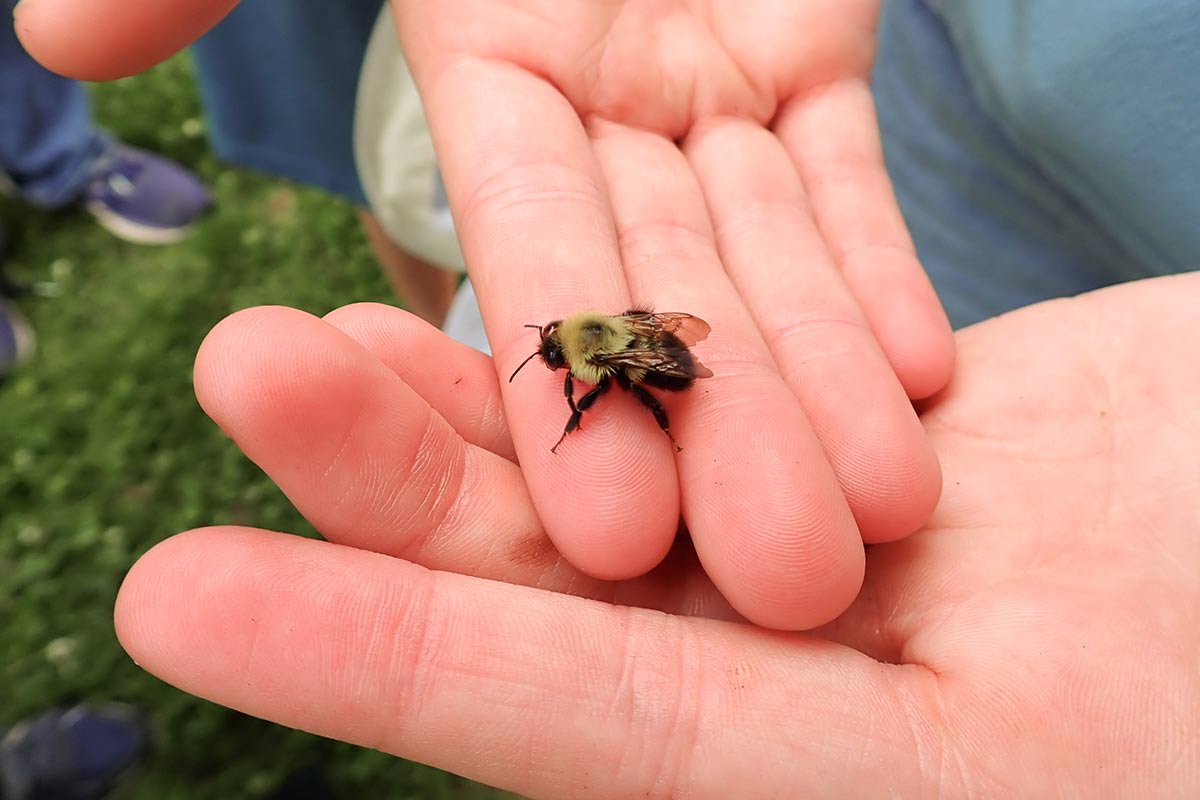
What should I do if I am stung by a bumble bee?
If you are stung, the first thing to do is to remove yourself from the situation. Bumble bees can sting more than once, and may recruit other members from their nest to help if they feel the threat remains.
The majority of individuals stung will have a minor reaction that is limited to the area around the sting, such as redness, swelling, and soreness. Most stings will not require any treatment, and will get better by themselves with time. Bee sting symptoms can usually be reduced with ice and over-the-counter medications.
However, between 1 to 5% of U.S. citizens are estimated to have experienced life-threatening allergic reactions due to insect stings. While very rare, there has been a known fatality due to complications likely caused by many bumble bee stings. It is important to learn the symptoms of anaphylaxis and seek medical care immediately if they appear.
What should I do if I find a bumble bee nest?
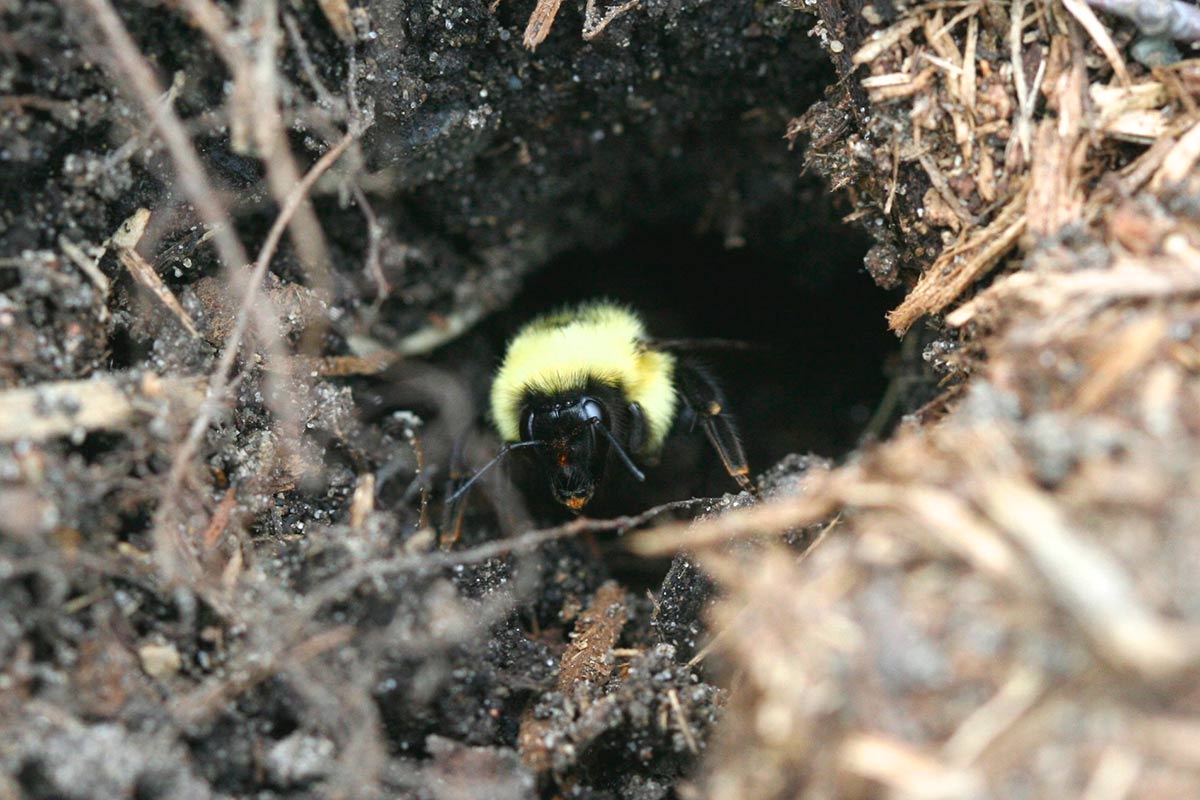
Bumble bee nests are generally small, usually with 50-200 individuals, and are often hidden underground in abandoned rodent burrows, grassy banks, compost piles, or sheltered cavities. In smaller nests, signs of a nest include 1-2 bees per minute flying in and out of a small ground-level entrance, though some common bumble bee species do nest above ground in abandoned bird nests.
If you do find a nest, consider yourself lucky! Many researchers have spent hours searching for nests with little luck. Every nest that we find is an opportunity to learn something about their nesting biology. So, once you are safe, take the time to report your findings on Bumble Bee Watch.
To stay safe, all you typically need to do is move slowly and avoid stepping on their nest. It’s their home, so give them a little space. Avoid mowing directly over the nest or attempting to relocate it yourself.
Bumble bee nests are only active from spring through summer. During the rest of the year, the colony is survived by a solo queen bee hibernating below ground, in a different location. By fall, the colony will die off and it is unlikely that the same nest will be occupied in the following year.
There are a few options to safely manage a bumble bee nest in an undesirable area. Whichever route you choose, you should be cautious of approaching an active nest.
Learn more about bumble bees
- Find the right flowers to feed the bumble bees in your yard with our Native Plant Lists
- Learn how to identify the bumble bees in your area with the Bumble Bee Watch and Bumble Bee Atlas community science projects
- Watch our webinar about the lives of bumble bee queens


Rich manages all aspects of the Xerces Society’s work on bumble bees. Rich has a master’s degree in conservation biology from San Francisco State University, and he joined the Xerces Society in 2012. While earning his degree, his thesis focused on local- and landscape-level factors that contribute to bumble bee species richness and abundance. He has also investigated native bee pollination in agricultural systems in the Central Valley of California and researched endangered butterflies in the San Juan Mountains of Colorado, as well as throughout the Pacific Northwest.

Dr. Sebastian Alejandro Echeverri, PhD (they/them) is your friendly neighborhood spider scientist, wildlife photographer, and science communicator. They joined Xerces in 2024 as a communications specialist for science and digital media, and are excited to continue making bugs (and bug conservation!) more accessible, inclusive, and joyful for everyone.