When you think of hibiscus, you probably think of a tropical paradise… After all, the yellow hibiscus (Hibiscus brackenridgei) has been Hawaii’s state flower since 1988! But did you know that there are also native hibiscus plants in the continental US? My personal favorite is crimsoneyed rosemallow (Hibiscus moscheutos)! If you’re based in the eastern United States and you want a garden that hums with life in late summer, give it a try! This dramatic perennial combines huge tropical-looking flowers with real ecological value, the best of both worlds.
What is crimsoneyed rosemallow?
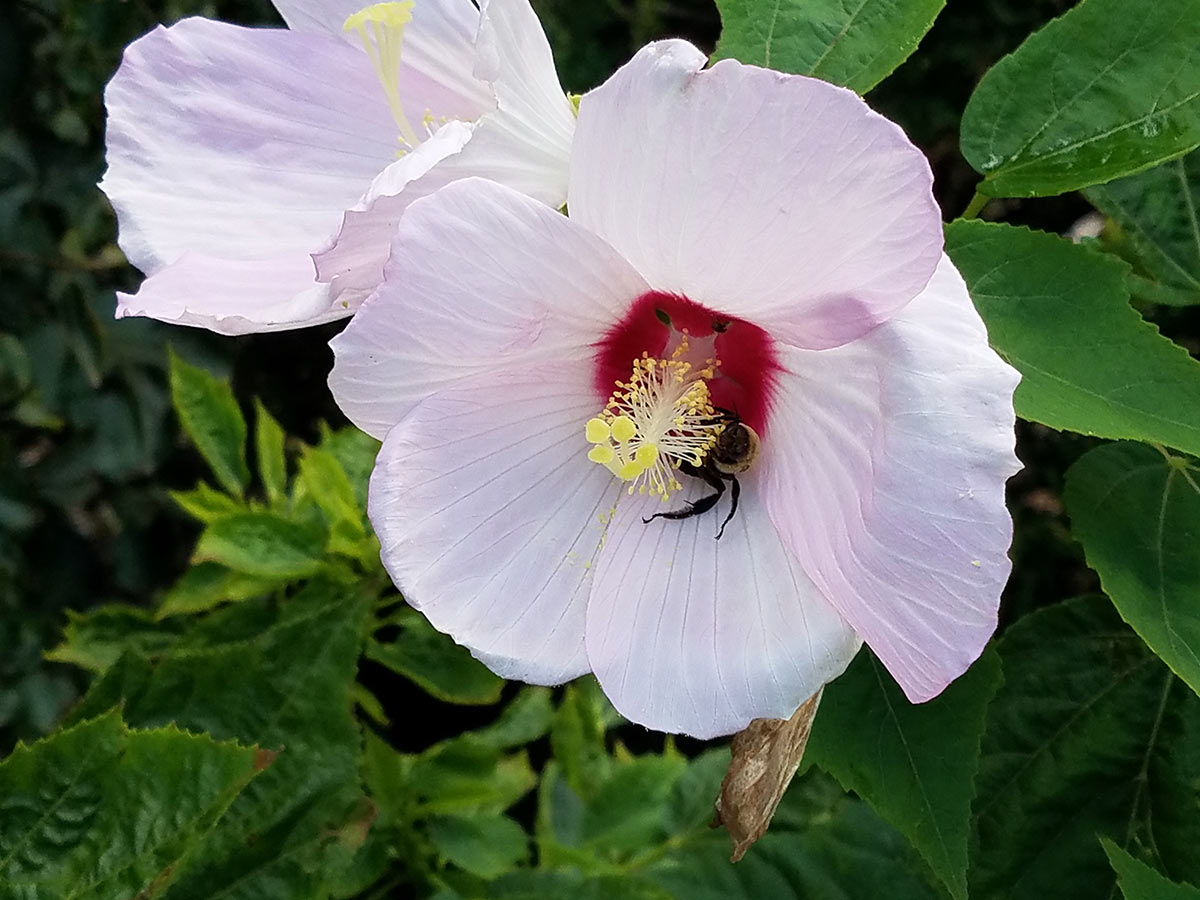
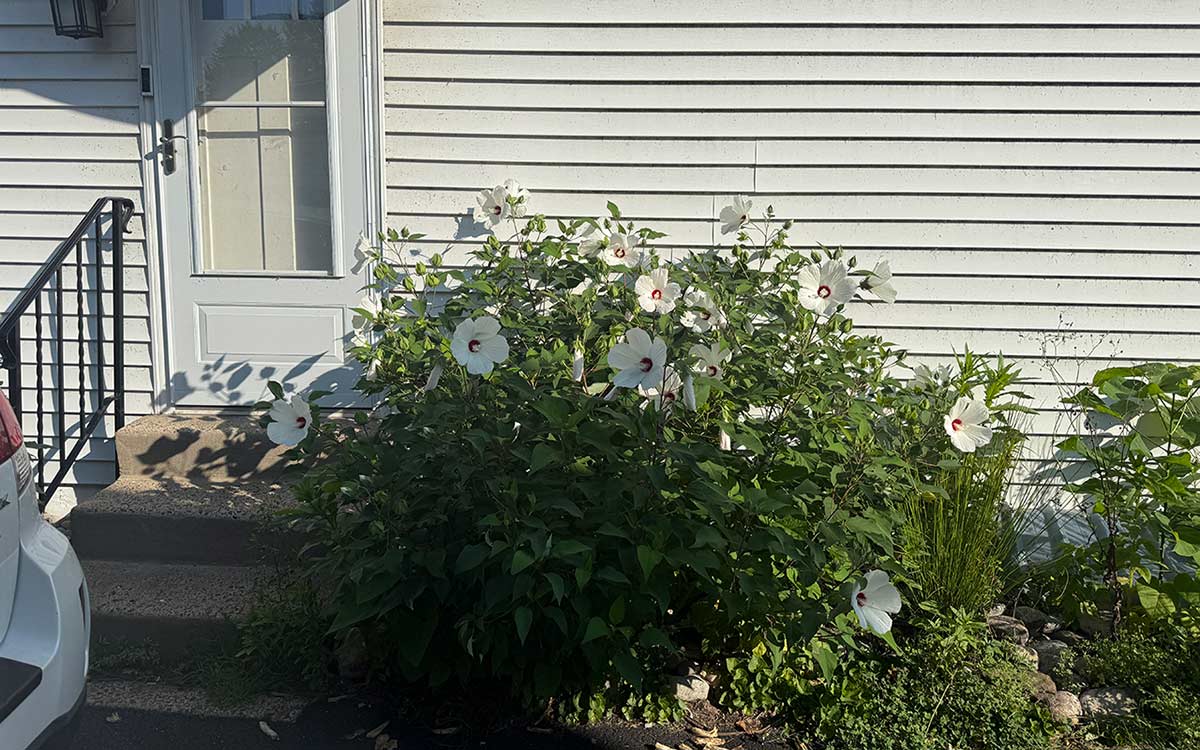
Native to wetlands, riverbanks, and moist meadows across the eastern United States, crimsoneyed rosemallow is a shrub-like perennial plant. It is also sometimes called swamp rosemallow or marshmallow hibiscus. The plant consists of several tall green stems emerging from a thick woody “base” or rootstock, called a caudex, and can grow up to 8 feet tall.
It loves a lot of sunlight, so it has evolved to do best in natural areas with periodic burning, flooding, or other disturbance to decrease shading from trees and shrubs. However, it can also thrive in your garden with the right conditions!
How to grow crimsoneyed rosemallow
Crimsoneyed rosemallow prefers slightly acidic, wet soil and full sun, but can also succeed in moist soil and part sun. It can get pretty big (2–8 feet tall and 2–5 feet wide), so make sure you have enough space for it. It has low drought tolerance, but it can thrive in large containers with supplemental watering. The flowers are pure white to deep pink, 4–8 inches in diameter, and typically bloom from June through August.
While crimsoneyed rosemallow is a fantastic plant on its own, pollinator habitat is best with a diverse group of plants that bloom throughout the entire growing season. Consider adding other native plants that prefer similar conditions, such as great blue lobelia and swamp milkweed, alongside your crimsoneyed rosemallow to provide an even better space for wildlife!
If you live outside of the eastern region of the United States, crimsoneyed rosemallow may not be native to your location. But don’t worry! There are many other great native plants, so you can easily find one that works for where you live and your garden conditions. Use our Pollinator-Friendly Native Plant Lists to learn more!
How to collect and plant crimsoneyed rosemallow seeds
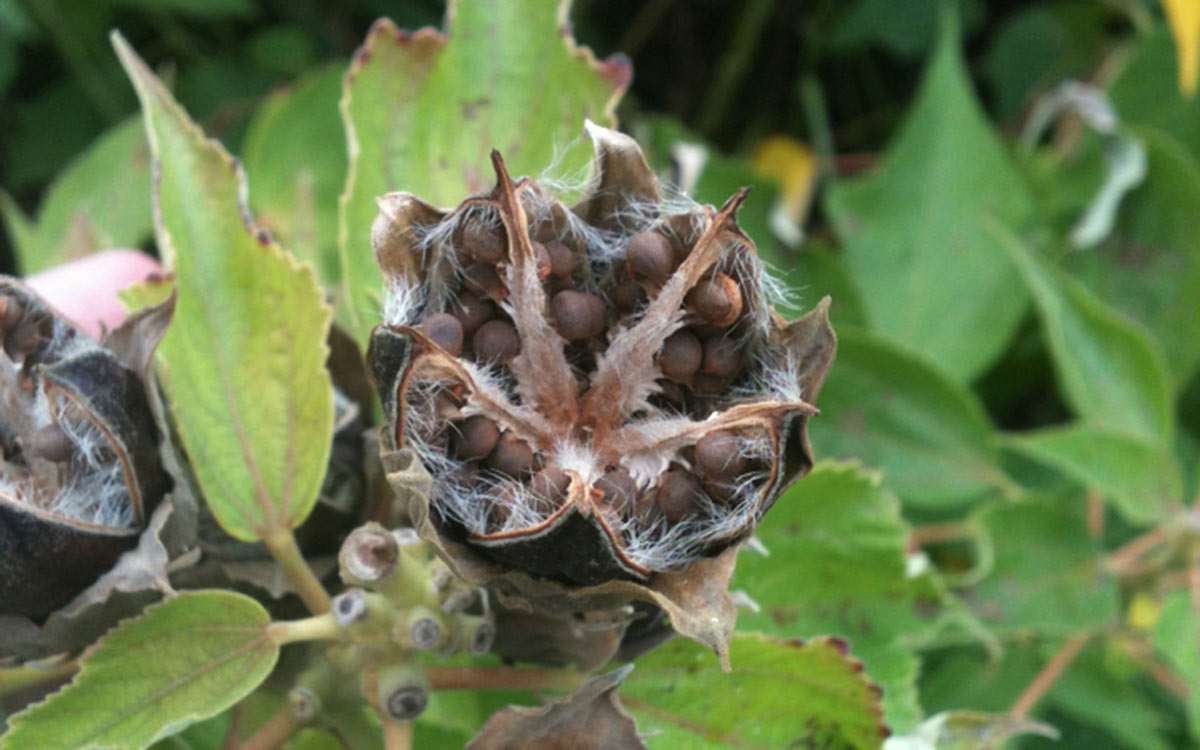
Collecting, saving, and planting crimsoneyed rosemallow seeds is very easy, and each flower will produce about 120 seeds, though some will likely be unviable due to beetle larvae. Approximately 4–5 weeks after flowering (usually October through November), the seed capsules will become fully dry, and the seeds within will turn dark brown—this is how you know it’s time to harvest! Once collected, store the seeds in a dry, cool container. Share them with your neighbors! The more native hibiscus, the better!
To plant your seeds, you can either sow in late fall—plants native to areas that have freezing temperatures in the winter are adapted to survive this—or you can keep the seeds in a dry, cool container in your home through the winter and sow in spring after the risk of freeze has passed. I’ve had success (~75% germination rate) with this method, so it seems stratification is not necessary for this plant!
What animals will visit crimsoneyed rosemallow?
When planting high-quality pollinator habitat, it is always a good idea to select plants that can support a wide range of generalist pollinators as well as specialist species. This plant does just that! Over thirty insect species and a few birds are known to use the flowers, leaves, stems, buds, or seeds of crimsoneyed rosemallow, including a few specialists.
Flowers
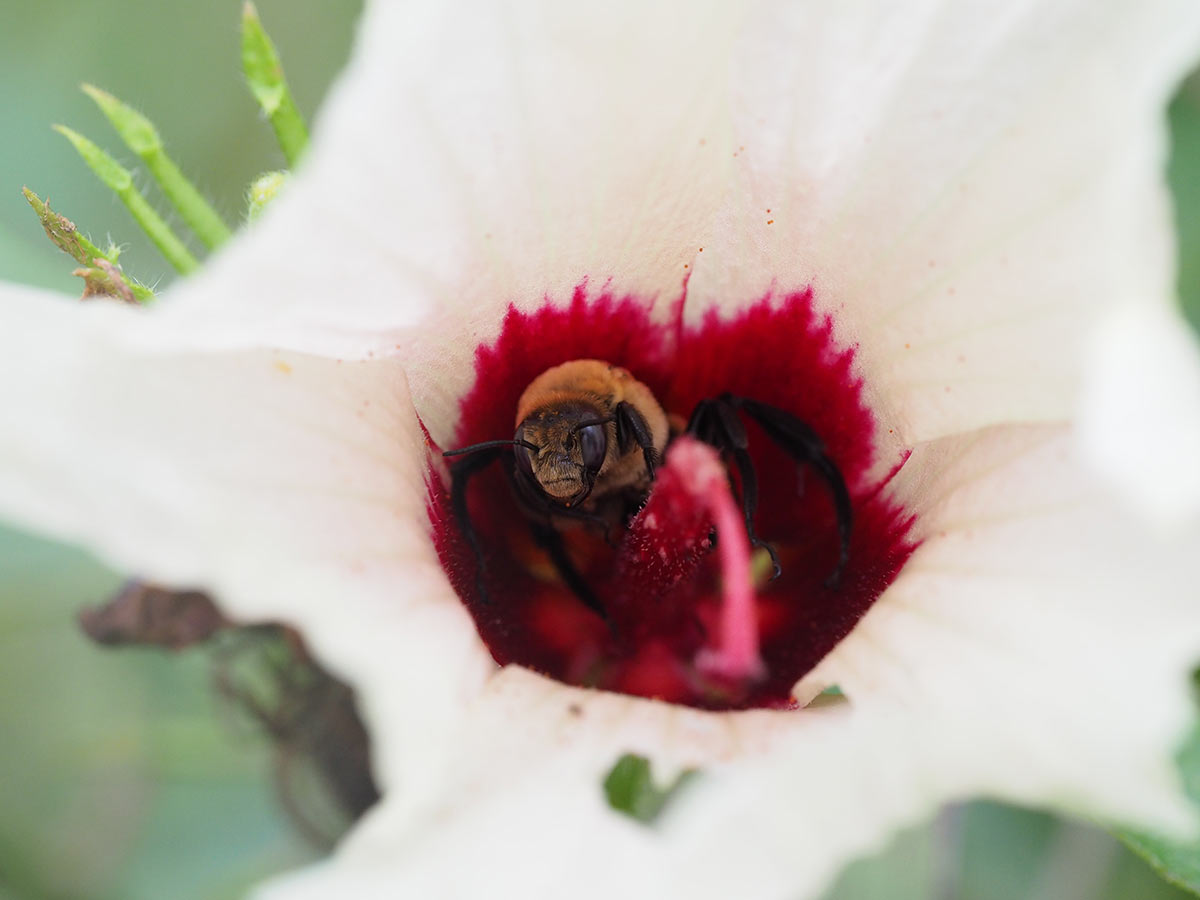
These big, beautiful blooms (up to 8 inches in diameter) open daily to provide abundant sugary nectar and protein-rich pollen to several species of bees, moths, butterflies, flies, and even some hummingbirds!
This plant is primarily pollinated by a single specialist solitary ground-nesting bee, known as the hibiscus bee or eastern digger bee (Ptilothrix bombiformis). This fuzzy black and yellow bee closely resembles a bumblebee, but it can be most easily distinguished by its long, gangly legs. This species occurs broadly in the eastern United States and has been observed in coastal salt marshes, freshwater wetlands, hardwood forests, and even urban areas during the hibiscus bloom season (June through August). Bumblebees can also sometimes be successful in pollinating crimsoneyed rosemallow, but aren’t nearly as effective.
Leaves, stems, and buds
Beyond pollen and nectar, several species of butterflies and moths use crimsoneyed rosemallow as a caterpillar host plant, including the painted lady (Vanessa cardui) and the gray hairstreak (Strymon melinus). Both of which have declined significantly over the last 20 years in the eastern United States according to our State of the Butterflies Report.
It is also a very important host plant for a specialist leafroller moth (Chionodes hibiscella), which will only feed on the leaves, flowers, and seed pods of mallows (family: Malvaceae), such as crimsoneyed rosemallow. The larvae will overwinter in dried leaves or seed capsules and pupate the following spring. These leafroller moths are an important food source for many predator and parasitoid insects, as well as birds and bats.
Some small bird species, such as red-winged blackbirds, may build nests among the stems of large crimsoneyed rosemallow plants!
Seeds
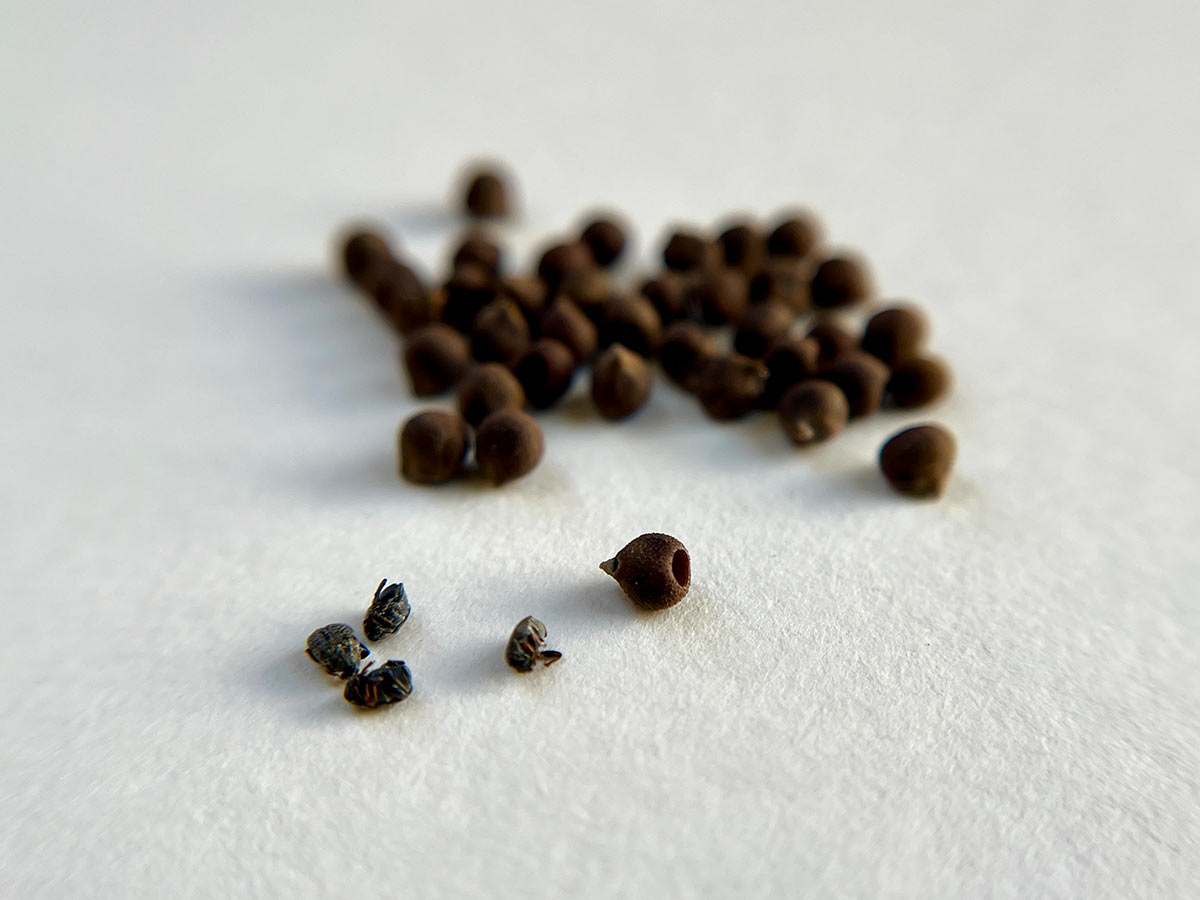
The seeds of crimsoneyed rosemallow are an important food source for two tiny native beetle species: the specialist hibiscus seed beetle (Althaeus hibisci) and a weevil (Conotrachelus fissunguis). Once hatched, these beetles will then become food for larger beetles, spiders, birds, and more. Northern bobwhites, blue-winged teals, pintails, and wood ducks also consume crimsoneyed rosemallow seeds.
As a resilient species with a long evolutionary relationship with these animals, crimsoneyed rosemallow can still succeed and grow well even with animals eating some of its seeds. In fact, this herbivory is thought to help regulate plant populations—after all, an established crimsoneyed rosemallow plant can produce thousands of seeds a year!
Where to buy crimsoneyed rosemallow
Ready to add this native hibiscus to your garden? Visit our Native Plant, Seed, and Services Directory to find a supplier near you. Don't forget to follow our Buying Bee-Safe Plants guidance!

As the pollinator conservation specialist and administrator, Raven promotes the conservation of pollinators through direct technical support, outreach, and events in the Mid-Atlantic region. She also supports the pollinator team through program tracking, reporting, publication preparation, communications, event coordination, responding to public inquiries, and more.