
The final survey period of the Xerces Society’s Western Monarch Count ended on January 11, 2026 after volunteers and partners recorded 6,464 monarch butterflies across 193 overwintering sites. This tally is 47% lower than the mid-season count of 12,260 butterflies, compared with 35%-58% seen in the past ten years. A drop between the mid-season to late-season counts is typical due to seasonal mortality and possibly early dispersal from overwintering sites.
The sites with the most monarchs during the the late season count included Natural Bridges State Park in Santa Cruz with 1,540 monarchs, a private site in Big Sur with 1,140 monarchs, Lighthouse Field State Beach in Santa Cruz with 804 monarchs, Skywest Golf Course in Hayward with 547 monarchs across two sites, and Moran Lake in Santa Cruz with 520 monarchs.
Low overwintering numbers raise concerns
The late-season count follows an already concerning mid-season tally, which ranked among the lowest since monitoring began in 1997. When monarch populations reach such low levels, they become more susceptible to a range of stressors and threats, including habitat loss, pesticide exposure, and weather extremes.
A small starting population in spring 2025, combined with a mediocre breeding season, likely contributed to the low numbers observed during this year’s overwintering season. There is concern that this pattern could repeat itself in 2026 unless there are favorable conditions in the breeding season. Monarchs can bounce back when conditions are right, especially over multiple breeding generations. But when populations are this small, significant rebounds become less likely, and immediate conservation action becomes critical.

Monarch migration is underway
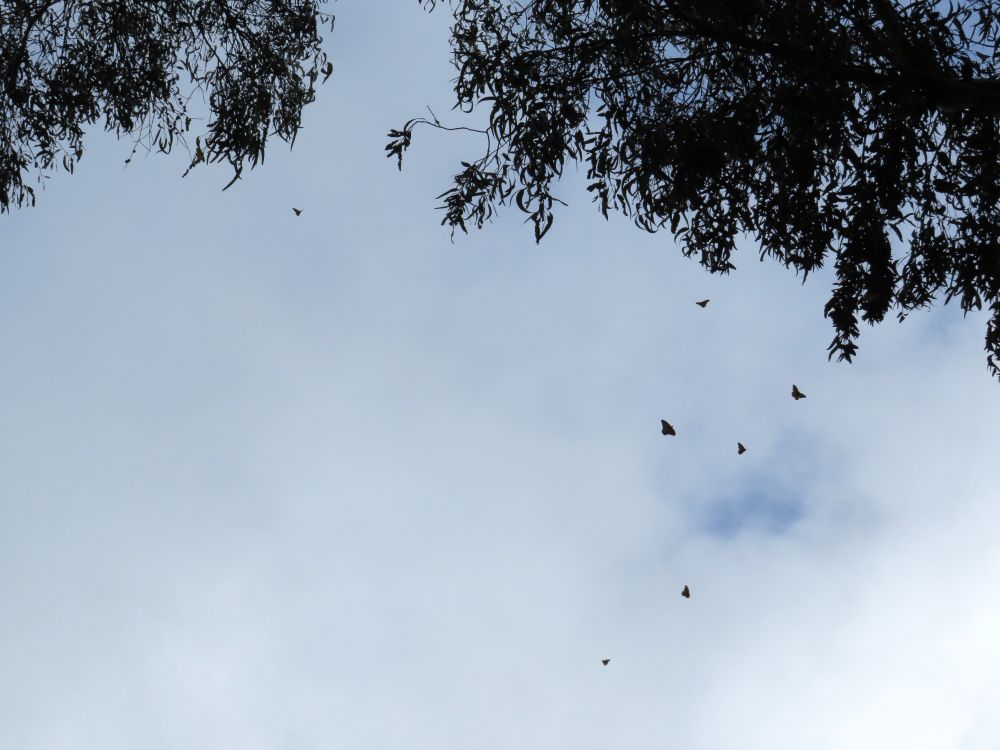
Community science observations and ultralight radio tag detections are showing cluster break up and spring migration is well underway. Western monarchs typically start leaving their overwintering grounds in January.
A few fall-tagged monarchs are still being detected at Central Coast overwintering sites or have moved inland up to 90 miles. In January and February, the California Department of Fish and Wildlife led an additional radio tagging effort in Alameda county. Together, these tagged butterflies show movement both between and away from overwintering sites—clear evidence that dispersal is underway.
Anyone interested can follow along with tagged monarch movements using the Project Monarch Science app, and learn more about this cutting-edge research through an interactive story map that explains how Xerces Society biologists are tracking monarch movement during the overwintering period.
What the late-season monarch count tells us
The Western Monarch Count tracks monarchs during a specific phase of their annual cycle: the overwintering period. While numbers naturally fluctuate within a season, the long-term trend is what matters most—and that trend shows a population at risk. What’s especially concerning is that these low numbers now seem normal. With fewer monarchs entering the breeding season, the path to recovery narrows, making continued action more urgent than ever.
How you can help monarchs recover
Monarch recovery depends on sustained habitat protection and restoration across their entire range. Key actions include:
- Restore monarch breeding and migratory habitat
- Protect monarchs and their habitat from pesticides
- Protect and manage California overwintering sites
- Spread the word about monarch and pollinator conservation
- Participate in community science
For those in California, applications are now open for the Xerces Society’s monarch and pollinator habitat kits, which provide regionally appropriate native plants free of charge to qualifying land managers. Learn more about the Xerces Society Habitat Kit Program, and review tips for making a successful pollinator garden.
For additional ways to support monarch recovery, visit the Western Monarch Call to Action. Monarchs need all of us, now more than ever.

As an endangered species conservation biologist, Isis works in California to protect and support the western population of monarch butterflies. She manages several community science projects, including the annual Western Monarch Count and the Western Monarch Milkweed Mapper, and provides support to land managers and the public on maintaining and restoring western monarch breeding habitat.