
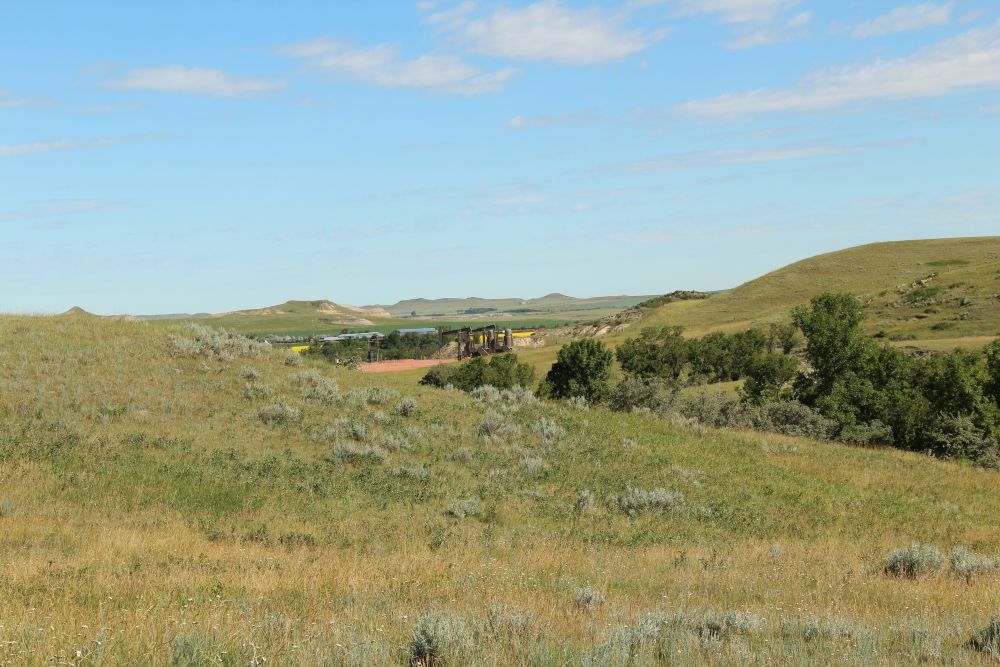
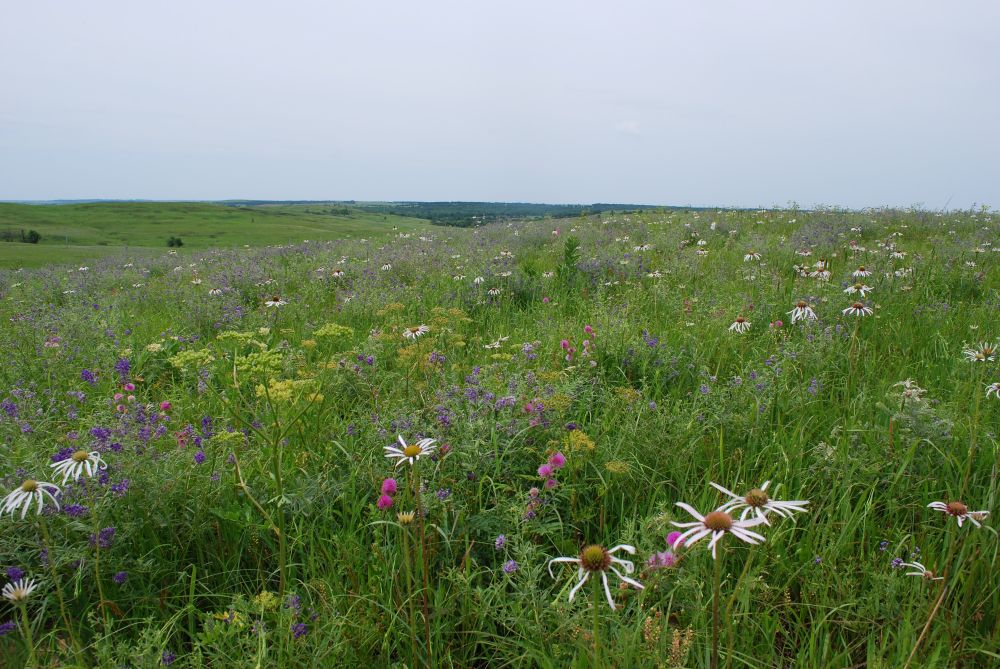
From the rolling Palouse prairies of the Pacific Northwest to the windswept coastal prairies of the Gulf Coast, grasslands can be found across the United States. A particularly vast expanse of grasslands extend throughout the central states from the foothills of the Rocky Mountains east to Indiana forests. Grasslands are an iconic landscape, inspiring songs, art, books, and movies. Though characterized by their abundance of grasses, with only occasional pockets of trees and shrubs, and often described historically as “seas of grass,” the vast number of grassland plant species are, in fact, wildflowers. Native grasslands are home to hundreds of species of plants and also support a wide array of wildlife, both large and small.
Grassland plants and wildlife evolved with natural fire (as well as fires intentionally started by indigenous peoples), periods of drought, and grazing. Bison, as well as other large grazers like elk and pronghorn, used to roam nomadically throughout grasslands, shaping plant communities as they grazed. With their extensive root systems, prairie wildflowers and grasses not only survive fire and grazing, but thrive. Those root systems helped to build rich, deep layers of topsoil prized by the settlers that moved in to farm the land following the Homestead Act of 1862. The introduction of widespread row crop agriculture marked the beginning of drastic and ongoing losses of prairies across much of North America.
North America’s grasslands are endangered
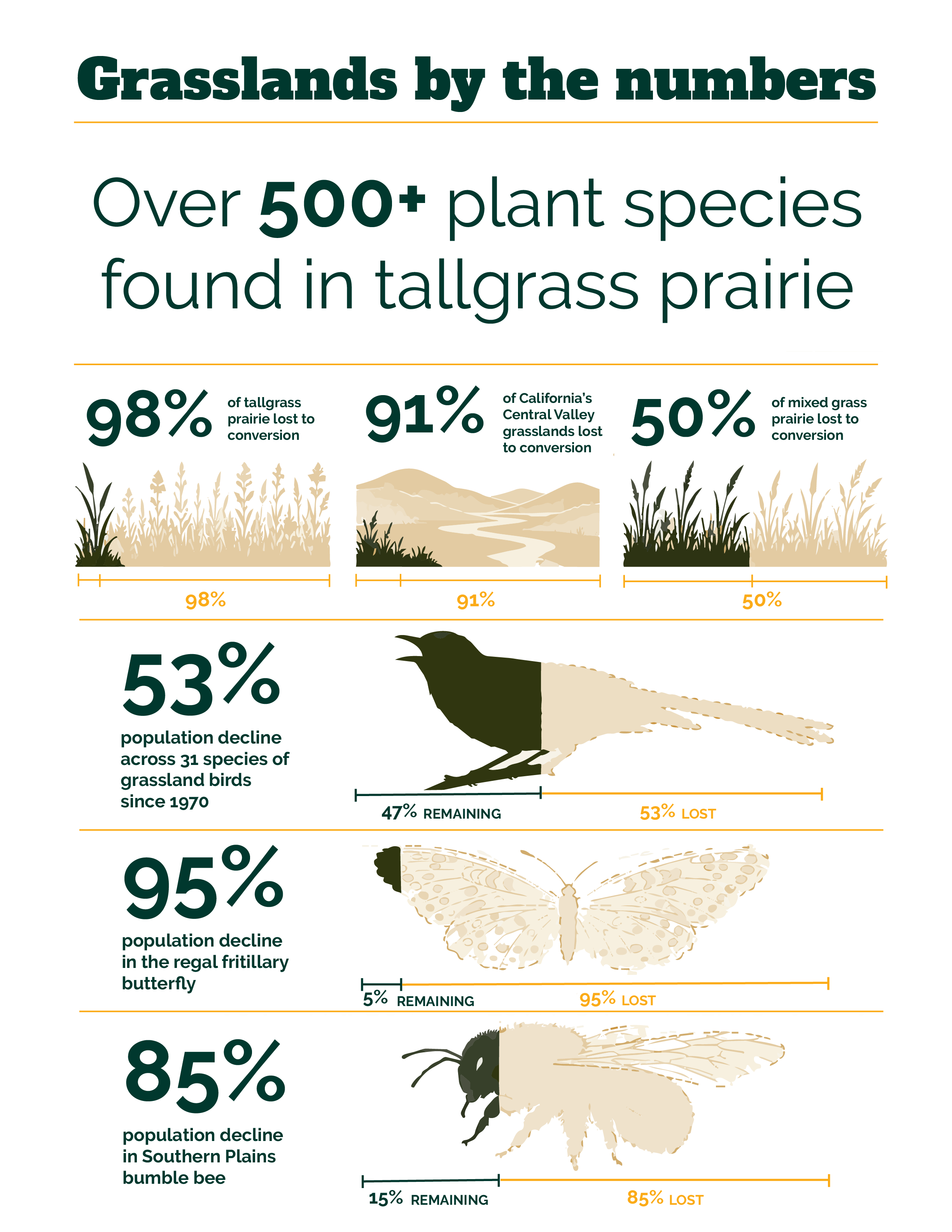
Over 70% of native grasslands have been lost to conversion to agricultural crops, fossil fuel development, or urban development. Native grasslands are now the most imperiled ecosystem in the United States, and among the most endangered and undervalued ecosystems on Earth. In fact, our North American grasslands are more endangered and more at risk of disappearing than the famously imperiled Amazon rainforest.
Millions of acres of native grasslands are also degraded annually due to invasions by woody plants that shade out grassland plants and invasive plant species that reduce plant diversity. Prairie plant communities, and the animals that depend on them, can be harmed by grazing too heavily or not heavily enough, as well as infrequent or too frequent fires. Grasslands across the nation are very different and need different management. For example, prescribed fire is more critical to grassland management in some regions, while grazing is more effective in other parts of the country, but needs careful limitation in other U.S. grasslands.
Grasslands are rich in biodiversity
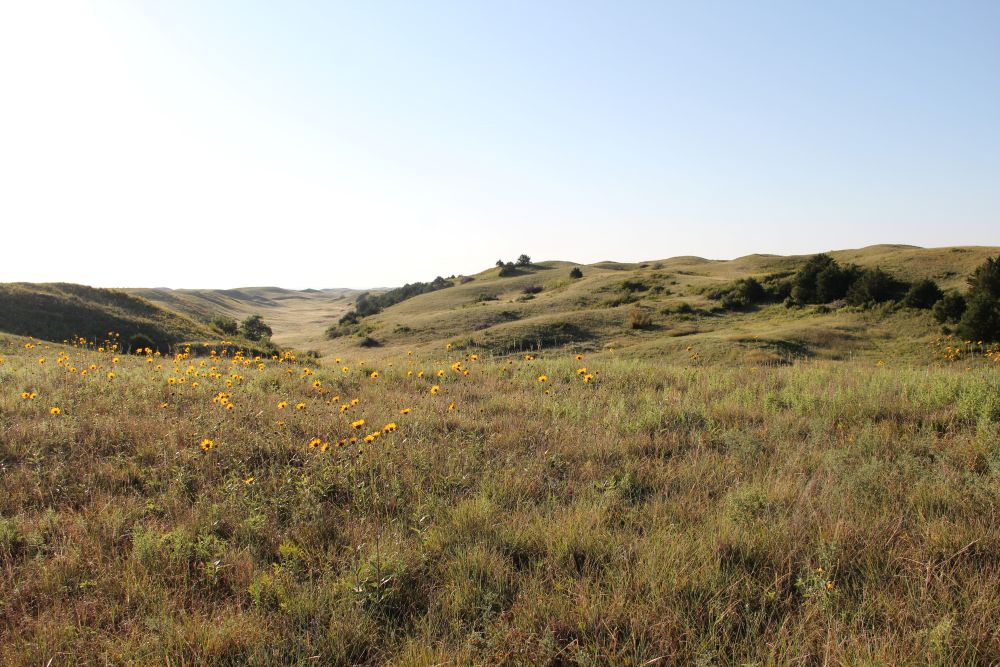
Grasslands are home to rich communities of plants, birds, mammals and insects. For example, over 670 plant species are found in just the Sandhills of Nebraska! Mammals such as swift fox, black-footed ferret and prairie dogs rely on grasslands, while 330 of the 435 breeding birds of the U.S. use grasslands for breeding. Insects that depend on grasslands include pollinators like the Southern Plains bumble bee and the regal fritillary butterfly, decomposers such as dung beetles and burying beetles, predators such as grass-carrying wasps that feed grasshoppers to their young, and prairie-dependent herbivores like many leafhoppers and the prairie cicada.
Grasslands store carbon and clean water
In addition to supporting biodiversity, grasslands provide a range of ecological services that benefit us all, including recharging groundwater that sustains plants and municipal water supplies, building soil health, and storing significant quantities of carbon underground in extensive root systems. Even when plant growth aboveground fluctuates due to drought, grazing, or fire, grassland root systems continue to store carbon. However, when plant diversity declines on grasslands, so do the critical ecological services grasslands provide. At the current rate of conversion and degradation, 2 to 2.5 million acres of grasslands are lost annually; some types of grasslands, such as tallgrass prairie, may be completely eliminated within 30 years. Grasslands are in dire need of conservation.
Xerces is working with private landowners to conserve grasslands
Currently the majority of native grasslands in the U.S. are privately owned, and many provide economic stability to rural communities by providing forage for grazing livestock. Xerces staff work with federal and state agencies, conservation organizations, ranchers and other land managers to identify and adopt practices that support plant and invertebrate diversity on grasslands. We provide technical guidance on invertebrate life cycles and habitat in support of the conservation work these groups are already doing. We also support the restoration and reconstruction of grasslands, helping to create seed mixes and guide habitat establishment through site preparation, timing and vegetation management to benefit pollinators and other insects. Our staff are passionate about keeping grasslands intact and healthy by supporting the caretakers and stewards of our remaining grasslands.
The future of grasslands depends on us
We can advocate for grasslands by asking our lawmakers to:
- Pass bills like the North American Grasslands Conservation Act
- Sustain and expand federal programs that incentivize and support private land grassland conservation, such as programs available through the Natural Resources Conservation Service, and
- Fund and expand existing public grasslands.
We can support private grasslands conservation by:
- Supporting market-based conservation efforts such as Audubon Society’s Conservation Ranching Initiative.
- Growing habitat where you live. Although we can’t recreate prairie in our yards, planting native grassland plants in our yards provides value for some invertebrate species.
- Spreading the word. Share the Xerces Society’s grasslands brochure with family and friends to help spread the word about the importance of grasslands and the insects who live there. We can also educate ourselves about the grasslands near us and tell others about the vital services they provide us, as well as share their beauty with others.
- Visiting public grasslands to marvel at the life they sustain, and explore and consider volunteer opportunities to support public grasslands.
Grasslands provide for biodiversity and for people by providing habitat for pollinators and other wildlife, supporting livestock and rural economies, and keeping soils healthy and water clean. We can all be a part of grassland conservation and ensure these beautiful landscapes persist into the future.
Further reading:

Jennifer provides resources and training for pollinator and beneficial insect habitat management and restoration in a variety of landscapes. She oversees a team of four USDA Natural Resource Conservation Service partner biologists and works closely with the NRCS. Jennifer has authored a number of publications and articles, and is co-author of several books, including Farming with Native Beneficial Insects, 100 Plants to Feed the Bees, and a roadside revegetation manual. Jennifer has a master's degree in entomology from the University of Kansas.

Sarah Hamilton Buxton grew up frequently visiting her grandparents’ farm where she developed an appreciation for farmers, ranchers, private landownership, and the natural world. She holds a bachelor's degree in wildlife science and a master's degree in renewable natural resources with a concentration in wildlife science. Prior to joining the Xerces Society, Sarah worked as a Farm Bill Specialist where she gained private lands biology experience working with farmers and ranchers enrolled in USDA Conservation Programs.